


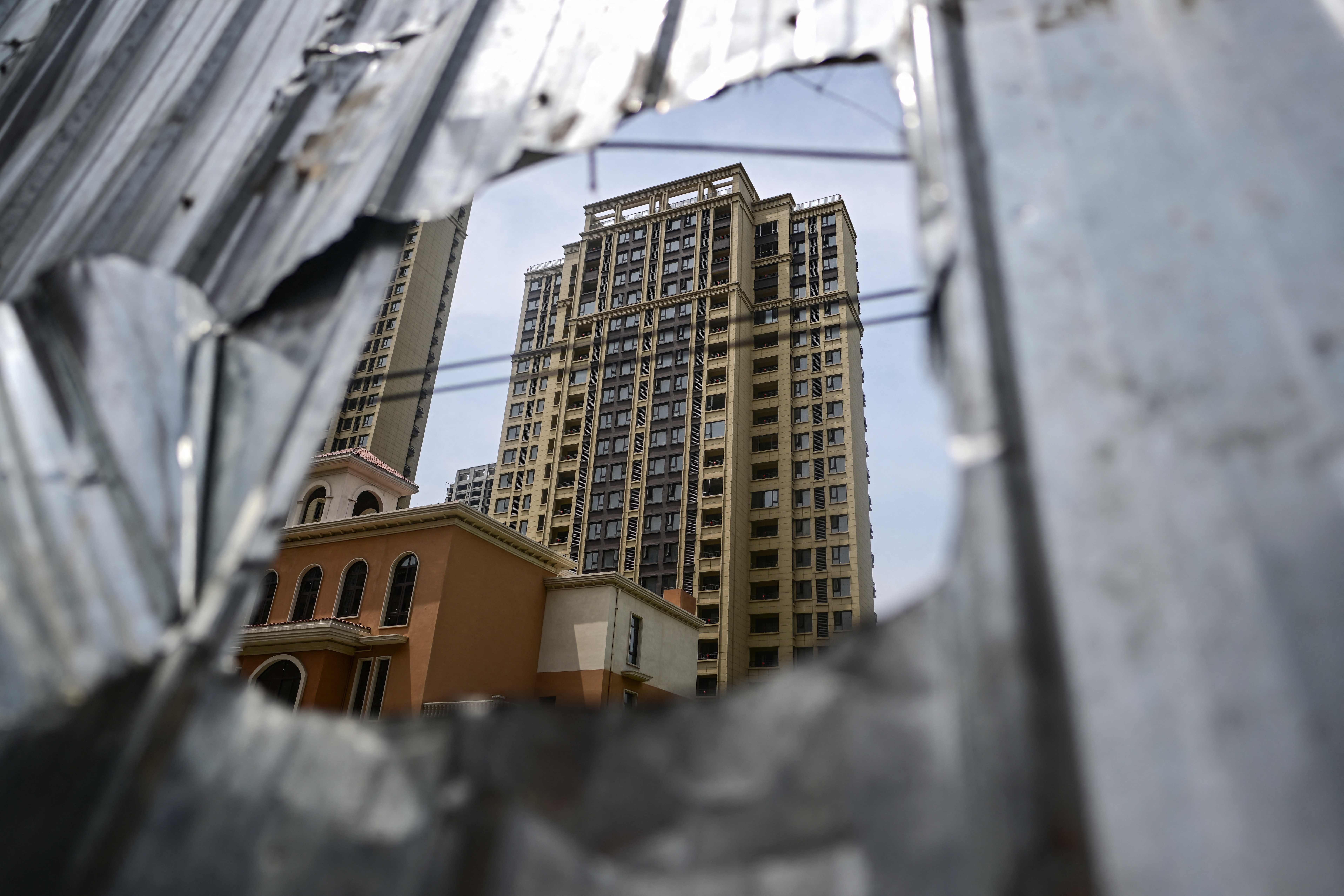
Once the roaring driver of China’s meteoric economic rise, the property sector now stands at a defining turning point. In China’s recently released proposals for the 15th Five-Year Plan (2026-2030), the real estate industry, previously placed within chapters on consumption, services, and urbanization in the country’s medium-term blueprints, has been repositioned under the section of “public well-being” for the first time in decades.
For many Chinese, the move evokes the bygone era of “welfare housing allocation,” when urban dwellings were doled out through a rigid command system. Yet the latest pivot is far from a nostalgic return to the cradle-to-grave welfare. After years of breakneck growth fueled by rampant high-leverage practices and nationwide speculation mania, the sector now faces its most protracted and challenging adjustment. Chinese policymakers seem to be steering the housing industry back to its “original aspiration”: providing homes that are available, affordable, and ameliorated.
The shifts came after a cascade of crises that punctured the once-towering myth of China’s property boom. Evergrande Group, once the country’s largest property developer by sales, collapsed into liquidation this August, leaving liabilities exceeding 2 trillion yuan (about 280 billion U.S. dollars). Country Garden, long the biggest private home seller in China, is grappling with slumping sales and offshore defaults, sinking into a painful restructuring. Several retail complex giants have resorted to offloading assets at steep discounts, a stark reversal for companies that once expanded aggressively across Chinese cities.
The fallout has rippled outward. Local governments, heavily reliant on land sales to finance their expansionary budgets, are confronting a painful debt reckoning despite sweeping policies last year to ease the pressure. Ordinary Chinese households, who for decades funneled their savings into property, are now approaching the market with caution, even trepidation.
China’s roaring twenty years of real estate are officially over. While the country’s GDP grew 5.2% year-on-year in the first three quarters of 2025, property investment fell 13.9% and new-home sales slid 7.9%. Bracing for a bleak outlook, the new five-year plan—framed around fresh expressions such as “high-quality development,” “quality homes” and “city-specific policies”—appears poised to herald a new epoch in China’s real estate market.
“The More the Merrier“ No More
In the new five-year blueprint, housing policy is framed less as an economic driver and more through a social lens. Wu Jing, director of the center for real estate at Tsinghua University, sees the shift as a return to first principles: “China’s housing system must be crystal clear about its foundational purpose—serving basic needs. Only then can we discuss its broader economic contribution.”
China’s early housing system, rooted in a planned economy, embodied that logic. Urban residents were largely employees of state-owned enterprises and lived in state-owned units. Housing was allocated at minimal cost, and rents were nominal, yet scarcity was acute. By the end of 1977, the average living space per person measured only 3.6 square meters, roughly the footprint of an escalator in a shopping mall.
The market-oriented reform launched in the late 1970s set the stage for change, yet state provision remained the norm until Shanghai piloted a housing provident fund in 1991. The real turning point came in 1998, when China formally ended the housing allocation system that had lasted for half a century. For millions of families, the familiar sense of security based on state-provided housing evaporated overnight: homes had become a commodity.
The sector then entered a frenetic two-decade boom. Annual housing starts ballooned from tens of millions of square meters in the 1990s to over one billion by 2010, peaking at 1.7 billion in 2017. Much of this surge was driven by one of the largest population shifts in human history: China’s urban population surged from 190 million in 1980 to 944 million in 2024, creating a scale of housing demand unmatched anywhere else.
Housing was no longer just a roof over one’s head. It had become a tradable and investable asset. Home-ownership became a key vehicle for lifestyle upgrading, with practical and speculative motives converging in a wave of market activity.
Guided by the principle that “housing consumption could drive domestic demand,” developers scrambled to expand, leveraging high turnover and heavy debt, fueled by presale deposits and bank loans. Investment in property development soared, averaging 19.5% growth annually. A pivotal 2003 government policy, which enshrined commercial ambitions in the housing industry, ushered in an era of extravaganza driven by policy incentives, surging market demand, and aggressive development models.
Hidden risks started to surface after rapid, euphoric growth. Soaring prices, rampant speculative buying, and local governments’ growing reliance on land sales left the market overly exposed to policy swings. At the same time, demographic aging, slowing urbanization, and a glut of new stock began to reshape supply-demand dynamics. In 2016, China’s top leader Xi Jinping famously uttered the phrase “housing is for living in, not for speculation,” signaling stricter regulations to cool speculative activity. It appeared to be a yellow flag for the long-entrenched role of real estate as a short-term engine for economic growth. By September 2024, China’s top decision-making body, the Politburo, for the first time called for measures to “stabilize the real estate market and halt the decline in prices,” demonstrating a continued commitment to a soft landing.
Nonetheless, real estate is likely to remain a pillar of China’s economy. Over the next quarter-century, nationwide demand is projected at 1–1.2 billion square meters of new housing each year, representing a market worth roughly 10 trillion yuan (about 1.4 trillion U.S. dollars). As Prof. Wu observes, the sector’s true value now lies less in spurring new construction and more in managing its vast existing stock to deliver steady economic support. A stock-focused approach is increasingly central to the industry’s contribution to the economy.
Beyond market dynamics, China’s housing system has been subtly shaped by a growing government-subsidized housing system—a measured policy swing distinct from the welfare allocations of earlier decades. In the latest “15th Five-Year Plan” proposals, the language around affordable housing signals a nuanced shift: where the previous plan spoke of “effectively increasing the supply of government-subsidized housing,” the new one emphasizes “improving” supply. Of the roughly 1.2 billion square meters in annual new housing demand, some 200 million comes from the safety-net segment. Though not profit-driven, it is vital in stabilizing expectations and anchoring social welfare.
China’s government-subsidized housing system, launched in 1994, initially focused on providing economically priced homes for low- and middle-income families, complemented by commercial housing for higher-income groups. Over time, more than 80 million units have been completed nationwide, benefiting over 200 million people—roughly the population of Brazil.
In May 2024, a new policy mechanism began rolling out. He Lifeng, the vice premier responsible for finances and housing, proposed that in cities burdened by high inventories of commercial housing, the government could “purchase in place of building”—acquiring existing unsold units at reasonable prices and converting them into affordable housing.
Once the central government set the direction, local authorities were quick off the mark. Within six months, more than 30 cities rolled out detailed guidelines for purchasing and repurposing existing housing stock. In Hebei Province, roughly 8,400 affordable rental units were secured in the first quarter of 2025, nearly half from existing commercial housing. Meanwhile, Liaoning Province plans to expand allocation-based housing by 120,000 units by 2027. State-owned enterprises are acting as intermediaries between market forces and government objectives.
These measures not only gently absorb excess inventory, but also reinforce and broaden China’s affordable housing system. Concurrently, the new proposals emphasize “quality homes” that are safe, comfortable, eco-friendly, and smart. While not a novel concept, it assumes renewed significance over the next five years, guiding both new developments and upgrades to China’s existing housing stock.
The vision of “quality homes” was concretized in the government-sponsored “residential project standards” implemented since May 2025. Key requirements include ceiling heights of at least three meters and mandatory elevators in buildings of four floors or more—a significant lowering from the previous seven-floor threshold. Standards for soundproofing and daylighting have been substantially upgraded, while mobile phone coverage in elevator cabins addresses a long-standing frustration. Nuanced as they might be, these upgrades elevate daily life while bringing Chinese housing closer to international benchmarks of quality and livability.
Toward a Soft Landing
Back in the frenzy of rapid construction and compressed schedules, building quality quickly surfaced as the most visible fault line. Across multiple regions, structures derided as “brittle towers” and “crooked blocks” laid bare the engineering compromises made in the rush to build. Excessive leverage and idle capital deepened financial fragility, while vast stretches of newly built districts remained eerily vacant. Viewed this way, today’s slowdown is less a rupture than a necessary recalibration—painful, yes, but hardly unexpected.
The 15th Five-Year Plan proposals call for “further improving foundational systems for the development, financing, and sales of commodity housing.” Notably, it places real estate risks at the very top of the national risk-prevention agenda, before local government debt and risks in small- and medium-sized financial institutions. The placement speaks for itself.
Policymakers are also closing institutional gaps left by years of rapid expansion. Developers are being required to insulate presale funds through stricter rules; A lead-bank mechanism ties lenders and builders jointly responsible for project execution, tightening accountability across the chain. And a gradual shift toward delivering completed homes, rather than selling off-plan, aims to eliminate the chronic risk of unfinished projects. Together, these measures seek to return China’s property sector to a sustainable, predictable, and deliverable footing.
Since the 2016 call that “housing is for living in, not for speculation,” China’s policy focus has evolved from suppressing speculative excess to managing downside risks and safeguarding systemic stability. The 2024 guidance to “stabilize the real estate market and halt the decline in prices” extends that approach while taking it a step further.
At the start of 2024, Zhu Ning, a leading expert on China’s economy and financial system at Shanghai Jiao Tong University, offered a blunt diagnosis: the real estate market may need another three to five years before truly finding its bottom. In a recent interview, Zhu said that while price declines have started to taper off in certain third- and fourth-tier cities, transactions and liquidity are rapidly drying up. Put simply, prices may stop falling, but fresh demand is virtually non-existent. “This is not a healthy market,” he said.
Recent statistics seemed to validate Zhu’s warning. Official data from China’s National Bureau of Statistics showed that in October, second-hand home prices in first-tier cities fell 0.9% month-on-month, marking a sixth consecutive month of declines. Second- and third-tier cities saw prices drop 0.6% and 0.7% respectively. Across 70 major cities, the traditional September–October peak season for home sales in China offered no relief: all recorded month-on-month declines for a second consecutive month.
The slowdown reflects decades of latent pressures finally surfacing. Over the past few decades, China has undergone one of the fastest and largest urban transformations in human history. The urbanization rate has climbed from 11% in 1949 to 67% today, and the country’s urban population now tops 940 million—twice the combined population of the European Union’s 27 member states.
That demographic tidal wave unleashed prodigious housing demand. Coupled with local governments’ reliance on land-sale revenues, it created a self-reinforcing loop of “high land prices, high home prices, and high expectations.” When the market turned, the same mechanisms ran in reverse: falling home prices eroded household wealth, shrinking transactions squeezed land finance, and mounting leverage surfaced as a systemic risk.
Population flows are shifting. The historic “rural-to-city” migration is giving way to movements from smaller towns toward major urban hubs. While megacities continue to exert an irresistible pull, many third- and fourth-tier cities face population loss, faltering demand, and dwindling economic vitality.
These dynamics do more than tilt the market cycle. They deepen it, turning a routine correction into a structural recalibration. Feng Changchun, deputy director of the Beijing Development Institute at Peking University, warns that China’s “second-stage” urbanization is still some distance from high-quality: newcomers often lack full access to public services, while smaller cities lack governance capacity to absorb or retain new residents.
Hegang, a third-tier industrial city in northeast China, illustrates the extremes: in some cases, two iPhones could buy an entire apartment. While rare, such valuations lay bare structural strains-supply-demand mismatches, slow absorption of existing stock, and mounting fiscal pressures-forces that entwine local finance and debt.
Across the country, tiered divergence is stark. First-tier cities retain resilience through concentrated jobs, industries, and educational resources. Many third- and fourth-tier cities, by contrast, are trapped in a downward spiral: falling home prices shrink fiscal revenues, tighter budgets curb public investment, and weakened services further depress demand.
The new five-year plan proposals therefore call for “city-specific policies” to align housing supply with genuine demand. The idea is to link the key elements of housing—people, land, capital, and supply—into a coordinated system. Decisions on where to expand or curb housing should no longer be dictated by developers’ timelines or fiscal pressures, but grounded in demographic trends, economic potential, and urban capacity. As Prof. Wu puts it, housing must follow people, not the reverse.
The wider challenge is to restore the fundamental social purpose of housing: providing stable homes and enabling healthier urban growth. China’s property market is feeling its way toward a slower, steadier, more resilient trajectory—and that cautious search may be the hardest, yet most consequential, part of a soft landing.
Smart, Managed, Investable
The proposals of the 15th Five-Year plan also signal a strategic shift in housing governance. China is moving beyond a build-at-all-costs mentality toward full life-cycle management: conducting regular structural check-ups to flag risks early, creating a dual-track maintenance fund financed by homeowners and supplemented by public resources, and promoting market-based housing quality and safety insurance.
As Prof. Wu noted, China’s housing stock is enormous, “quality home” construction, old-neighbourhood upgrades, smart-community development, and green retrofitting still offer substantial economic potential. “Rather than cutting capacity, we should transform it,” he said. That logic is already taking shape in major cities, where urban regeneration, smart-community solutions, and environmentally conscious upgrades are rapidly becoming core business lines for developers.
In a district of Shenzhen, a city often dubbed China’s Silicon Valley, leading developer China Resources Land has evolved beyond a builder, orchestrating neighborhoods as integrated urban ecosystems—with housing, offices, retail, and sports facilities-becoming a city operator. In a smart community in Beijing, a system provides 24/7 monitoring service for residents: elevators can detect when a senior living alone falls and trigger instant alerts, while water and electricity systems can automatically shut off in emergencies. Hangzhou offers a similar vision, with sensor-equipped mattresses tracking elderly residents’ health and notifying doctors as needed.
Prof. Wu likens this shift to the leap from a feature phone to a smartphone, suggesting China has a chance to “overtake on a curve” in residential intelligence, much as it has in the electric vehicle sector through innovation and competitive ingenuity.
For policymakers and developers alike, the stakes extend well beyond individual buildings. Real estate now spans smart infrastructure, city-wide operations, energy-efficient design, and enhanced lifestyle services, redrawing the sector’s boundaries.
In the meantime, the proposals call for accelerating new real estate models, with financial innovation playing a key role in structural transformation. As Prof. Feng noted, reconfiguring the flow of capital could unlock long-standing bottlenecks and create a more diversified and resilient financing system.
“Compared with developed economies, China’s range of housing finance tools remains limited. Emerging instruments such as REITs, however, offer a promising path forward,” said Prof. Feng.
REITs, or Real Estate Investment Trusts, are publicly traded vehicles that own or finance income-generating real estate, enabling individual investors to participate in property markets without directly purchasing buildings themselves. In China, their gradual introduction could broaden investment channels, improve capital efficiency, and support new models of sustainable real estate development.
China launched its public REITs pilot in 2020. By August 2025, over 70 infrastructure REITs were listed, raising 198.6 billion yuan in total, with a combined market value of 218.8 billion yuan. The portfolio has broadened beyond traditional transport and energy assets to include heating networks, environmental projects, logistics hubs, industrial parks, data centers, rental housing, water infrastructure, and even consumer-facing facilities—laying the foundation for a more diversified, market-driven real estate finance ecosystem.
“China’s built assets are worth an estimated 400 trillion yuan,” said Prof. Wu. “The economic returns from managing and optimizing this vast stock are far from exhausted. Even amid adjustments, the sector’s fundamental strengths—its scale, adaptability, and capacity for innovation—remain firmly intact, anchoring the future of China’s cities and economy.”
Tan Yixiao is a Xinhua journalist. Currently based in Beijing, she spent three years in the U.S. covering politics and international affairs. Email: yixiaotan@live.cn
Xu Zeyu, founder of Sinical China, is a journalist with Xinhua News Agency. Email: xuzeyuphilip@gmail.com
For more stories on China’s five-year plans:
Five-Year Plans: Why Market-Oriented China Keeps Legacy of Planned Economy

China’s proposals for the 15th Five-Year Plan (2026–2030) have just been unveiled at a key Party plenum. The medium-term national development blueprint, spanning policy initiatives on technology, finance, and opening-up, has naturally drawn global attention amid the country’s mounting pressure to secure an economic soft landing and its volatile trade te…